
How to Apply for a Digital Nomad Visa (Step-by-Step Guide for 2026)

This post contains affiliate links and I may earn commissions if you make a purchase.

Remote work has reshaped how people live, travel, and build careers. Instead of short-term travel or visa hopping, many professionals are now choosing to live abroad legally through digital nomad visas.

This guide walks you through exactly how to apply for a digital nomad visa — who qualifies, what documents you need, and what to expect once you start the process.
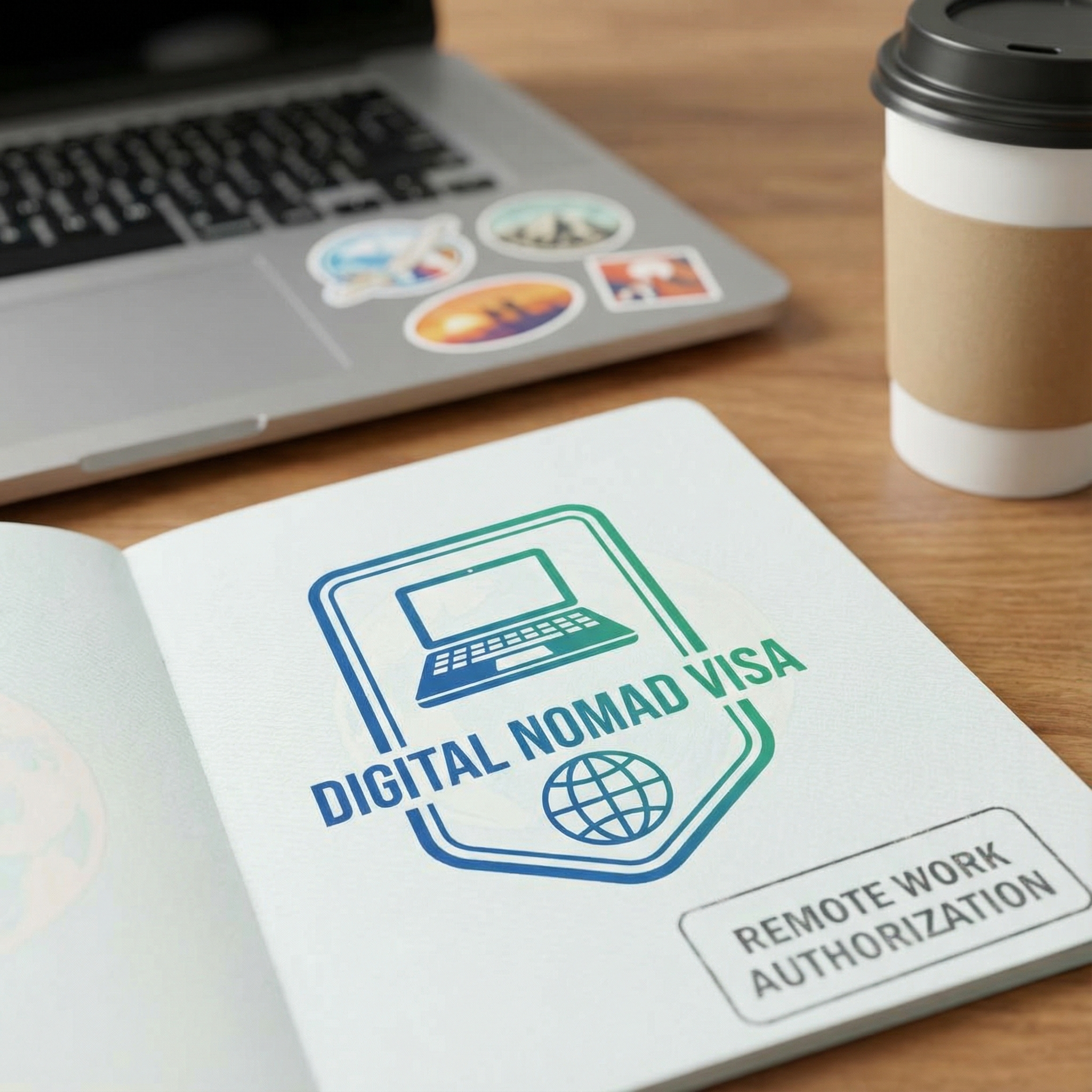
Remote worker using a laptop in a scenic international location
Digital nomad visas allow remote professionals to live abroad legally while working online.

What Is a Digital Nomad Visa?

A digital nomad visa is a legal residency permit that allows individuals to live in a foreign country while working remotely for an employer or clients located elsewhere.

Unlike tourist visas, digital nomad visas are designed for longer stays and provide legal clarity around income, residency, and taxation.

Who Qualifies for a Digital Nomad Visa?

  • Remote employees working for companies outside the host country
  • Freelancers and independent contractors
  • Online business owners and entrepreneurs
  • Professionals with verifiable recurring income

Most programs require proof of income, valid health insurance, and a clean criminal record. Some countries also require proof of accommodation or minimum savings.

Countries Offering Digital Nomad Visas
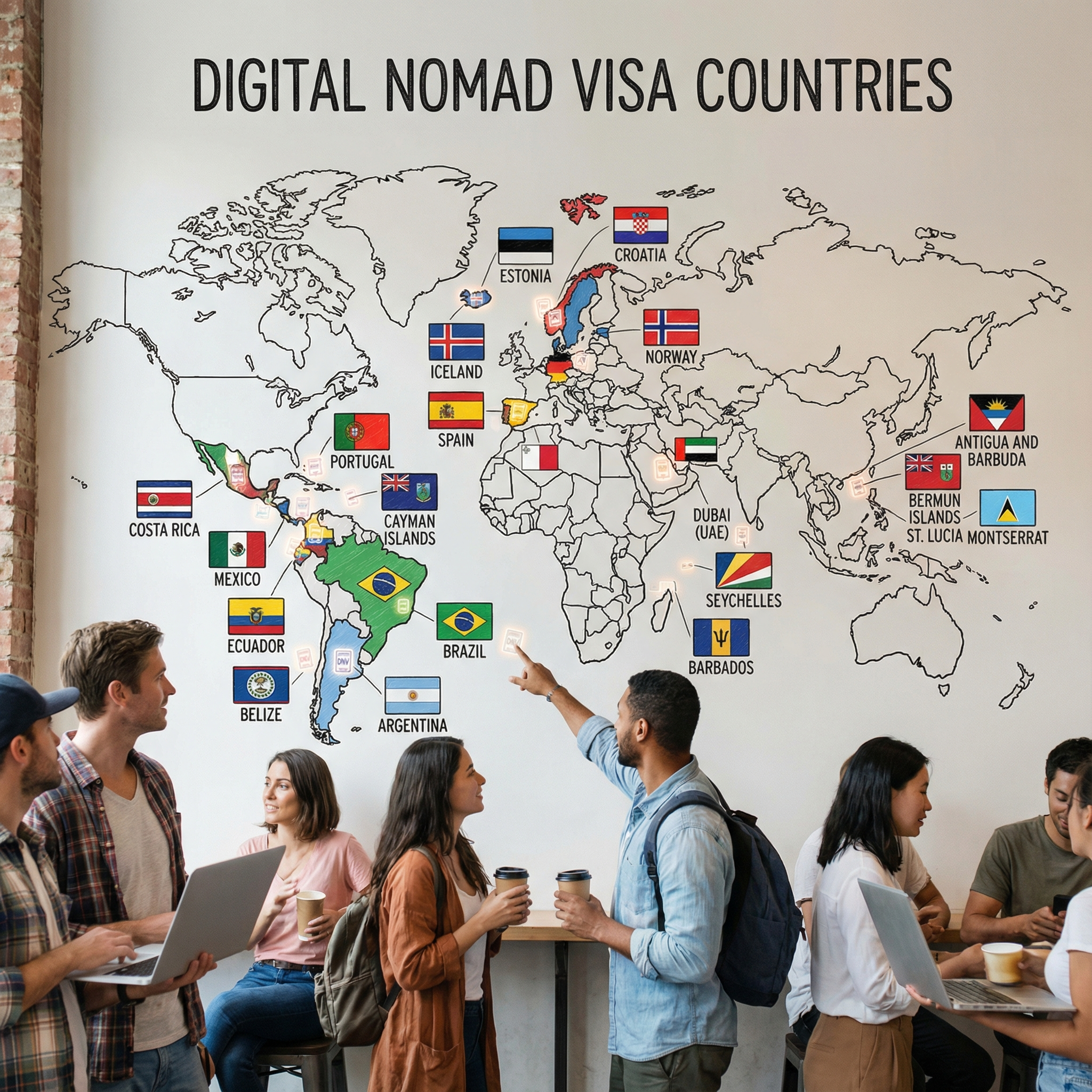
World map showing countries that offer digital nomad visas
Many countries now offer digital nomad visas designed for remote professionals.

Some of the most popular destinations include:

  • Portugal
  • Spain
  • Estonia
  • Croatia
  • Costa Rica
  • Mexico
  • Georgia

Step-by-Step: How to Apply for a Digital Nomad Visa

  1. Confirm your eligibility and income requirements
  2. Gather required documents (passport, income proof, insurance)
  3. Submit your application online or through an embassy
  4. Wait for approval and prepare for relocation

Common Mistakes to Avoid

  • Applying without understanding tax obligations
  • Assuming tourist visas allow remote work
  • Underestimating cost of living or income requirements
  • Using unofficial or unreliable visa agents

Is a Digital Nomad Visa Worth It?

If you plan to live abroad long-term, want legal stability, and prefer a structured path to working internationally, a digital nomad visa is often the best solution.

For shorter stays, a tourist visa may be enough — but for serious location independence, formal residency offers peace of mind.

Related Reading

Ready to build a location-independent life?
Nomad Ninja helps you design income streams and systems that support long-term travel.
Please follow and like us:
Pin Share
Jeremy Avatar

Related Articles

2 responses to “How to Apply for a Digital Nomad Visa (Step-by-Step Guide for 2026)”

  1. Marios Tofarides Avatar
    Marios Tofarides

    Hey Jeremy,

    Super clear step-by-step guide. The parts that make or break a digital nomad visa, in my experience, are clean documentation, proof of remote income that matches the rules, health insurance that names the host country, and a timeline buffer for apostilles and translations. I also plan for tax residency thresholds and local registration requirements, so there are no surprises after landing.

    Which countries on your list have the most predictable processing times and renewals right now, and do any allow dependents with a simpler document set? Also, how do you advise applicants to handle tax residency and permanent establishment risk if they plan to stay beyond six months?

    Marios

    1. Hey Marios — appreciate this. You just summarized the “why did my application get punted back” checklist better than most embassy pages.

      On your questions:

      Predictable processing + renewals: it shifts fast, so I don’t want to pretend there’s a permanent leaderboard here. In general though, the most “predictable” programs tend to be the ones with clear published requirements, a defined portal/consulate flow, and a long track record. On that list, Estonia and Croatia have historically been the most straightforward “follow the checklist, get an answer” experiences for a lot of applicants. Spain and Portugal can be great, but timelines can vary more depending on region/consulate workload.

      Dependents with simpler docs: many programs do allow dependents, but “simpler” is relative. Spain and Portugal typically allow dependents, and Costa Rica also has pathways where family can be included, but expect the usual add-ons: relationship proof, insurance coverage for dependents, and sometimes extra financial thresholds. The “simplest” is usually whichever country has the clearest dependent checklist and least translation/apostille friction for your documents.

      Tax residency + permanent establishment (PE) risk past 6 months: this is where I always tell people to slow down and get it right.

      Tax residency: the common tripwire is the 183-day rule (varies by country and can be more nuanced). If you’re likely to cross it, assume you may trigger tax residency and plan accordingly.

      Treaties + ties: check tax treaty coverage (if applicable) and your “ties” to your home country (home, family, business presence).

      PE risk: usually increases if you’re running a business that looks “local” (local clients, local employees/contractors, an office, signing contracts in-country, etc.). Many nomads reduce risk by keeping income clearly foreign-sourced, avoiding a local fixed place of business, and keeping contracts/invoicing consistent with “remote work for non-local clients.”

      Practical takeaway: if someone is planning 6+ months in one country, I recommend a quick consult with a cross-border tax pro before they commit to dates. It’s cheaper than learning the hard way.

      If you tell me which one or two countries you’re personally weighing, I’ll answer in a tighter way (processing predictability, renewals, dependents) based on the current “on-the-ground” reality for those options.

Leave a Comment

Leave a Reply

Your email address will not be published. Required fields are marked *